- ← Part 1: How Websites Are Built: Hosting, Domains & Tech Options
- 👉 Part 2: 2026 Realistic Cost Breakdown & Budget Guide
- Part 3: Funnels, Social Media & Strategy →
If you have ever asked a web designer or agency, "How much will it cost to build a website for my business?", you have probably received answers ranging from ₦50,000 to ₦5,000,000 or more.
Why is the price gap so massive?
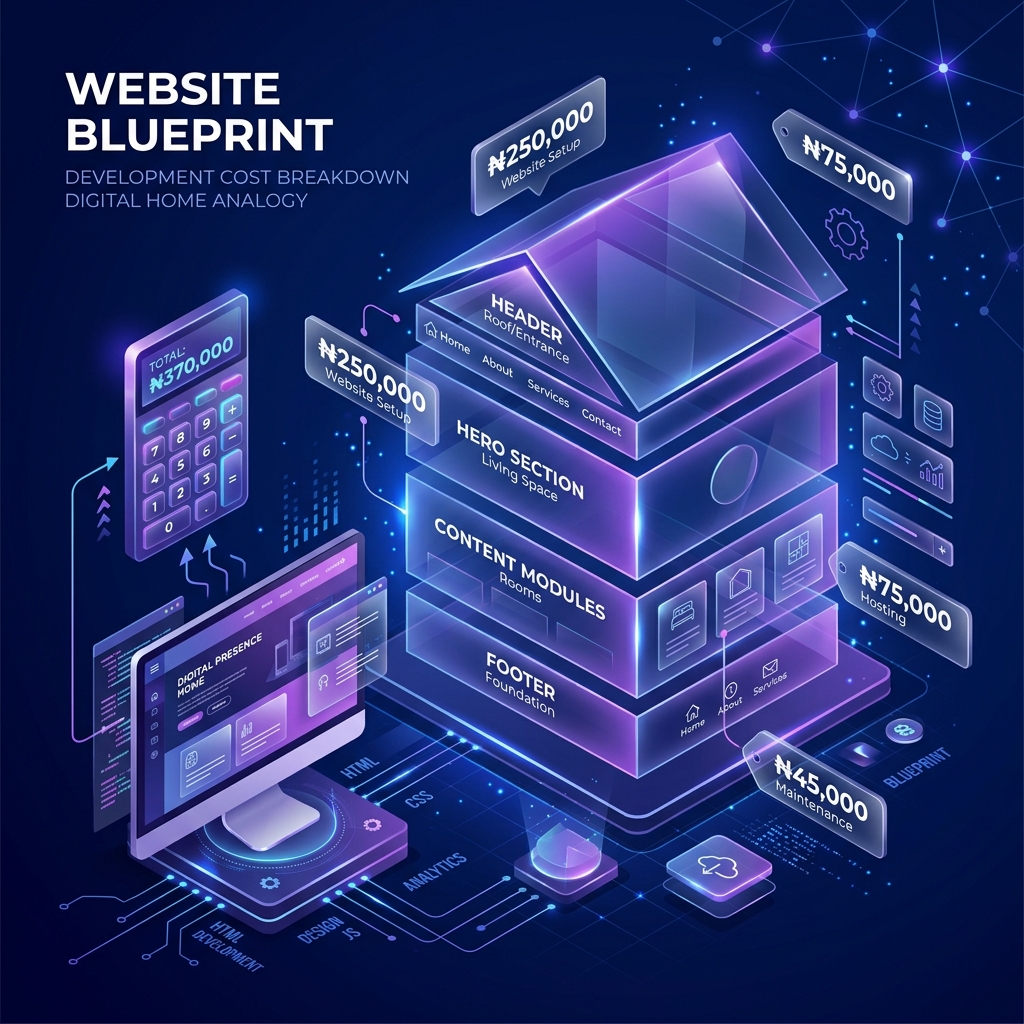
In Part 1 of this series, we explained that a website is like a physical house (hosting = land, domain = address, technology = type of house). In this second part, we will examine what a website actually costs in 2026 and how to budget for your business.
1. The 3 Cost Categories of Every Website
"The cost of a website" is never just one single number. Every professional web project consists of three distinct investment areas:
A. Infrastructure Costs (Hardware & Software)
- Domain name registration (annual renewal)
- Web hosting infrastructure (annual or monthly)
- Platform subscription or CMS environment
- Premium theme or plugin software licenses
B. Professional Work (Design, Strategy & Labor)
- Business positioning & conversion strategy
- UX (User Experience) layout & navigation
- Professional copywriting & brand messaging
- Custom UI design & responsive mobile styling
- Development & technical integration
- On-page SEO setup & payment gateway connections
C. Ongoing Costs (Upkeep & Renewals)
- Annual domain and hosting renewals
- Plugin and security software updates
- Technical maintenance, backups, and monitoring
- Content updates, email marketing tools, and CRM connections
2. Realistic Website Cost Comparison Matrix
Important Pricing Disclaimer: These figures are realistic planning ranges, not fixed market prices. Website development costs vary by provider experience, project scope, technical complexity, and exchange rate movements. Conversion estimates use an approximate reference rate of $1 ≈ ₦1,390 (August 2026 reference).
| Website Approach | Approximate Budget (NGN) | Approx. USD Equivalent | Key Considerations |
|---|---|---|---|
| DIY / AI Website Builder | ₦139,000 – ₦417,000 / year | $100 – $300 / year | Covers platform fee, domain, and basic tools. Owner does all labor, copywriting, and design. |
| WordPress DIY | ₦104,000 – ₦417,000 / year | $75 – $300 / year | Covers domain, hosting, and potential premium theme/plugins. Requires technical setup by owner. |
| Professional Business Site (WordPress/CMS) | ₦200,000 – ₦800,000+ | $145 – $575+ | Standard small-business website built by a professional. Quotes vary based on page count, copy, and features. |
| Custom-Coded Marketing Website | ₦1,500,000 – ₦4,000,000+ | $1,080 – $2,880+ | Bespoke design, high performance, custom animations, tailored components, and advanced integrations. |
| Ecommerce Website | ₦500,000 – ₦3,000,000+ | $360 – $2,160+ | Includes product catalog, shopping cart, checkout, payment gateways, stock management, and transactional emails. |
| Complex Web Application | ₦2,000,000 – ₦10,000,000+ | $1,440 – $7,200+ | Full custom web software: user dashboards, databases, APIs, custom business logic, and authentication. |
3. The Time vs. Money Trade-off
Notice the critical difference between DIY costs and Professional Development costs:
- DIY (Do-It-Yourself): You save upfront cash, but you pay with your own time, energy, and learning curve. You become the copywriter, designer, tester, and troubleshooter.
- Hiring a Professional: You invest capital upfront to buy back your time, avoid technical debt, and receive a strategic sales asset designed to generate revenue.
4. So, What Should You Budget?
To select your budget category, identify which scenario matches your business right now:
"I just need to get online."
Suitable for a simple DIY project or basic landing page to validate a new business idea or showcase contact details.
"I need a professional business website."
Broad planning range for a professionally built service business website with clear messaging, lead forms, and mobile optimization.
"My website is a core growth driver."
Essential when your site involves active ecommerce, sales funnels, CRM integrations, custom code, or automated client portals.
Now that you have the pricing breakdown, discover how to structure your website for sales, funnels, and brand strategy in Part 3.
Read Part 3: Website Strategy & Business Growth →